Monday, August 27, 2012

A Story with Flavor


Hultner Estrada with Bethany Beachum


Grab your favorite fruit and put it on Lesbia’s hands and she will make a delicious jelly. Papaya, guava, melon, pineapple – it doesn’t matter what kind of fruit it is.  The imagination is the limit for this woman, known for her extraordinary palate and her gift for teaching.

Trained in chemistry and specialized in fruit and vegetable preserves, Lesbia Cárcamo has worked for several different organizations training other women in western Nicaragua so that they can make the most of the plants on their land.

Nevertheless, with all of the knowledge and training she has, Lesbia has still not been able to overcome many of her own personal limitations.  “It wasn’t until just recently that I asked myself, ‘How is it that I have not been able to escape from poverty?  Why haven’t I started my own business?’” she shares with us.

“I had received all kinds of trainings, from those related to my career to other courses on topics such as health and women’s issues.  I taught others to work hard and improve their lives, but I myself was not practicing what I preached.  My family was in total poverty, subsisting on what I made from the workshops I was giving.”

Lesbia explains that what she had was a worldview problem.  She was getting in the way of herself and her ability to move ahead in life.  “I couldn’t defeat the negativity I had nor had I improved my own self-esteem.  I lived with the mentality that I was always going to be poor.  I wouldn’t consider opening my own business because I was sure that it would go badly”, she thinks aloud.

But one day, Lesbia came upon a realization, “Whenever I hear teachings on Biblical worldview and I read that God lifts us out of the misery of poverty, I am encouraged to empower myself spiritually by reading the Bible.  As I read, I am more and more amazed by it and grow in my belief in it,” she emphasizes.


“I always thought that the Bible was full of good stories – but stories from the past, from other times that didn’t apply to the reality that we are living today.  But when this blindfold was removed from my eyes, I realized that those good things that happened in the past were also possible in the present.”

The change in perspective and the faith she recovered in those workshops restored Lesbia’s optimism to write a business plan and design a budget.  “I began to knock on doors, here, there, at the town hall and other places.  And yes, some doors were closed, but I knew that God was with me and that another, better door was going to open,” she expresses with enthusiasm.

Today, Preservas Cárcamo is Lesbia and her family’s company’s name.  They have been able to convert a room in their house into a workshop with basic equipment for creating and jarring the delicious jams that she learned to make 20 years ago.

Lesbia is thankful to her pastor, Francisca Rayo, to the fellowship of the other women entrepreneurs who are known as the “Deborah League,” and to the Nehemiah Center, for making it possible to give the trainings on “Kingdom Businesses” in her community.


Tuesday, August 14, 2012

At the center of difficulty


Hultner Estrada & Dave Stienstra


What kind of father sends his son off to be tortured? Such a father, could easily be considered inhuman. A God such as, could certainly not be the God of the universe.

These lines illustrate the Greek mindset that antagonized the message of Paul in the first century. Jews demand signs and gentiles argue through reason. “Our gospel of Christ crucified is hard for Jews to accept, and everyone else thinks our message is foolish”, we hear the aposlte reveal in his report. "But there are those God has chosen, both Jews and others. To them Christ [crucified] is God’s power and God’s wisdom" (1 Corinthians 1).

Oddly enough, the ancient Greek mentality still powerfully affects the way we see God, the scriptures, and the world today. In a post-modern era in which feelings and individual comfort have taken the lead, people prefer to hear from a friendly God, guarantor of security and happiness, rather than a Master who invites us to take up a cross every day.

Indeed, the Bible says God is love, that He defines himself as an advocate, provider, and Savior, but it also warns us that we live in a dangerous world and that we are likely to face tribulation (John 16:33)

Trusting in a God who is good but doesn’t necessarily conform to the current standards of "security" is not easy. It takes conviction. It takes a humble faith to embrace those moments of pain and suffering as our participation in the suffering of Christ --the fullest expression of the wisdom and power of God.

The Greeks could not accept the sacrifice of the Son of God was the vehicle used by the Father to bring salvation and restoration to all creation. Likewise today, many people still struggle with the idea that a loving God will allow pain and suffering affect the lives of His children.

As those who have decided to believe, we accept the risk of walking the path of difficulty, but with the confidence that the power and wisdom of God will be manifested, and God will act through those painful moments and everything will work for the good of His Kingdom.

Through this brief post, The Nehemiah Center would like to send a word of encouragement and solidarity to several brothers, transformational leaders, who are going through very difficult circumstances. We are remembering and praying for many members of our community who are suffering the loss of loved ones, health complications, and other troubles and attacks.

The courage and resilience of each of these friends, as Paul would say, to quench the fury of the flames, to draw strength from weakness and to stay strong in the battle, encourages us to continue trusting in the sovereignty and care of the Lord even when we are in the center of the difficulty.

"If truth is that God will allow their children
pass through the fire,
is also true that he will be with them
amid the flames. "

Thursday, August 2, 2012

For Those On The Outside


There are people who, by their own will, would never set foot in a church.  Meet Manuel, who is one of those people.  Although his mother is a Christian and he acknowledges the truth of the Gospel, it has been many years since Manuel has entered a church... nor does he have any desire to in the near future.

Five years ago, Manuel was right in the middle of a tragedy.  While carrying out a special mission with the military in a remote region of the country, he witnessed the brutal assassination of his best friend at the hands of another good friend.  The three men were soldiers trained in marine watch and rescue and other capacities.  But one night, an argument erupted between the two friends and in the heat of drunkenness, it tragically ended in spilled blood.

The crime not only took the life of his friend, but it also robbed Manuel of his career in the military.  Following a complicated judicial process, he was forbidden from re-entering the military as a soldier.  For Manuel, this was the vocation and sacrifice he had dreamed of since he was a young boy.  “The military was my life, my family, my future.  I moved up very high in the ranks, and I couldn’t understand why they would throw me out after I had invested so much,” expressed Manuel, visibly pained.

Ever since that weekend in 2007, Manuel has been able to think of little else.  The trauma is too great, and there are too many images and daily events that trigger his memory of that terrible night when his story changed forever.  “The psychologist that was assigned to me did nothing more than say a few nice words and tell me to think about something else... that’s crazy,” says this boy who comes off as a much older man.

For many years now, Manuel has been drinking daily.  He always goes about with “some” alcohol in his system because it is the only way he feels he can survive the loss of five years ago.  I met Manuel on the outskirts of a soccer field in Sutiava, where he was watching the game by himself from a distance and with a sad look on his face.


“These are the kinds of youth we want to gather,” said the Lieutenant Tiberio, who along with Pastor Denis Cienfuego and Belén Church, have begun an initiative to rescue at-risk youth through doing creative activities in the streets.

Manuel is just one of the many people who do not enter the church.  There are some who don’t come simply because they cannot be in places packed with people.  Others don’t because they have problems with hearing and they cannot withstand the high volume that is common in many church services.  And others frankly are not capable because they are not in good health, are chronically injured, struggle with depression, or are incapable of moving about on their own.

We would like to commend Belén Church, Pastor Denis, Lieutenant Tiberio, and the police of Sutiava for their passion for youth, especially those who struggle with addictions, loneliness, or misconduct.  Thanks be to God for these leaders who are spending time with the marginalized of our society and who have hope that people like these may one day set foot in the church.  Thanks be to God that they are being Christ in the streets and in their neighborhood.

“So let us go out to him, outside the camp, bearing the disgrace He bore.”
Hebreos 13:13 (NLT) 

Wednesday, July 18, 2012

That family umbilical cord


Hultner Estrada & Dave Stienstra

Las Peñitas Beach is a picturesque place.  In this bay of tranquil waters, river currents meet the tides at the Padre Ramos Estuary, one of the wildlife parks in the department of León.

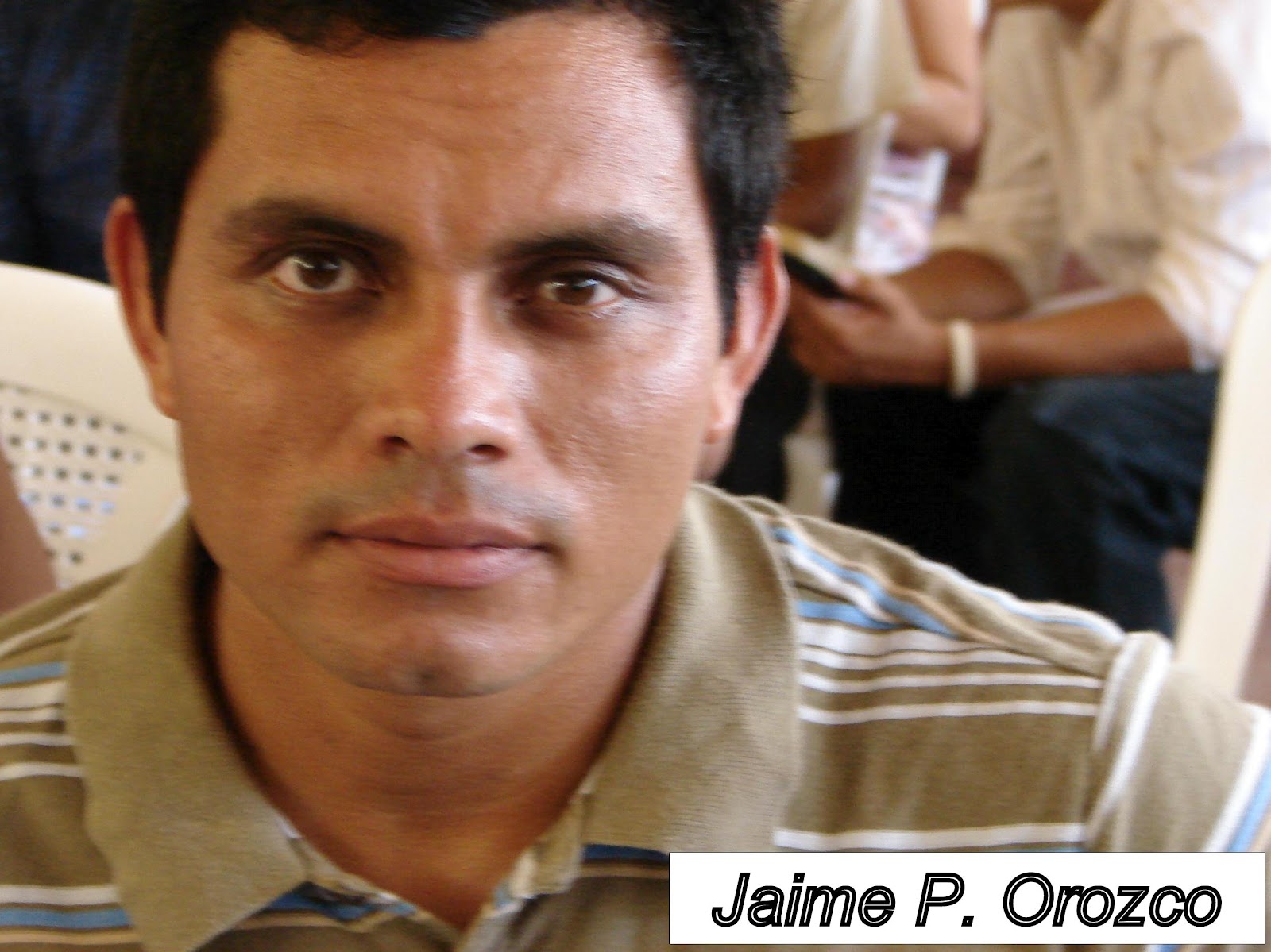
Very close to this beautiful place lives Jaime Pastor Orozco, a friendly local fisherman in his thirties, who is dedicated to the discipleship of youth in his costal neighborhood.

One day, while chating about the cultural differences between Anglo-Americans and Nicaraguans, Jaime Pastor made a comment that I have never forgotten.  “North American youth, at 18 years old, are already looking for a way to leave the nest and live on their own.  We Nicaraguans, at age 18, are looking for ways to bring a woman into our homes.”

Jaime Pastor’s commentary has made me think much about the reality of thousands of young couples that are living with their in-laws.

Why have so many of the young people who have married decided to live in the home of their in-laws?

The reasons are economic, but also cultural.  They lack a stable income, earning less than $250 per month, and are unable to qualify for a home loan.  Much less are they capable of paying the sizable down payment and associated fees.  But they have not cut the “familial umbilical cord”, which would allow the young couple to establish their own home.

In our culture, a “good son” is a thankful son who remains close to his parents.  As a result, abandoning the parents’ home is understood as a gesture of rejection towards those who raised him.  In many cases, when a son or daughter leaves, it means one less income for the family budget, which is the reason that parents prefer to build an addition onto the house for the newlyweds; it is a strategy for protecting their mutual finances.

“After thirty years of marriage, I had never broken this umbilical cord!” shares Estanislao Ramírez, who, along with his wife, recently completed the marriage course Restoring the Original Model, offered by the Nehemiah Center in the city of Estelí.

“I had never thought about the commandment in the Bible that says, ‘For that reason, a man will leave his father and mother and be united to his wife,’ and that cord was still firmly attached for me,” Estanislao adds.  His wife interrupts, “From the moment that he made some changes in the relationship with his family, our communication and relationship has improved enormously. In this way the course has helped us greatly.”

Cutting the familial umbilical cord is a challenge for young couples, but also for other couples who have years of independence. This is a challenging process if we consider that our culture gives a greater respect and regard for the mother or the father than your own spouse.

Fortunately, many Christians in Estelí and in the coastal area of ​​Leon and other cities are embracing the biblical principles for a married life according to God's design.

"Husbands love your wives ... and the wife must respect her husband."
Ephesians 5:25-33


Monday, July 2, 2012

They Helped Us Expand Our Radars


Hultner Estrada & Bethany Beachum

When a worldview is improved, the changes that people experience are always surprising.

This past month, more than 100 leaders from different churches in three Nicaraguan cities completed the first level of the program for formation of Agents of Transformation, bringing to close a year of studies in Biblical Worldview.

Although the Nehemiah Center has already been facilitating workshops for eight years now, the testimonies that come out of the end of each cycle are always surprising.  For example, Julián Garcia, a rancher from the town of Estelí, tells us:

 “I don’t have much education, I wasn’t even able to finish primary school, and maybe that is why I have always had difficulties with relating to other people.  I always thought it would be very hard to become an important person in society, but with these courses I have felt uplifted.  I feel that I have grown so much and have been trained to understand that the Lord has called me to be an Agent of Transformation.

Another thing that has kept me from relating well with other people is the Christian message that I had received, which was a very accusatory and condemning one.  Now, I feel much freer to talk about the Lord because I can share a gospel of peace.  Now I can tell others that He is a God of love, that He wants His people to flourish, and that it is us that He is calling to bring about that flourishing.”

On the part of Zulema Trujillo, a nurse in the hospital of Chinandega, she summarizes her experience with the following:

 “Because of a poor decision I made when I was younger, I distanced myself from the life of the church.  Ever since then it has been very difficult for me to return to a good relationship with the Lord.  Furthermore, because of my job, I don’t allocate time to be involved in any type of ministry.  So really I have felt sad in my life as a Christian; I have felt useless before God.

But through the courses on Biblical Worldview, I have realized that what I am doing in the hospital is a way of serving God, that I can minister, I can serve and be useful to God from my workplace.  And that, for me, has been very beautiful.  Now I feel that I can enjoy my job more.  I feel that I am close to God and that I serve him every time I help another person.  I feel that I have been freed.”

Stories similar to this one are very common at the end of the worldview courses, but we should clarify and recognize that the source of all such changes is the Word of God.  It is the rediscovery of Biblical truth and how we understand the world and ourselves as creations and co-workers of God.


As Julián García expresses, it is these truths that “have helped us expand our radars toward our own family and our community and come to understand that God wants a transformed society and we are His instruments to carry it out.” 

Friday, June 15, 2012

Transformation in the Computer Lab


Hultner Estrada

In general, we don’t question our customs.

They are part of us, day after day, and because of how well they work, we don’t see much reason to change them.

“We were accustomed to using pirated software.  We saw this as the “normal” thing to do – we didn’t know it was illegal.”  With these words, the director of the Bethlehem Baptist School of Managua describes what has become the widespread culture for using software at the national level.


A large number of the cybercafés, academies, and schools in Nicaragua that teach computer literacy, use “cloned” or “borrowed” software licenses, as has become the norm for the rest of the world as well.  “It wasn’t until the folks from REDPROCOM came and made us aware that we came to see that we were being poor Christian witnesses,” adds director Jazmina López.

REDPROCOM is a network of Christian computer teachers that was started by a small group of friends who were interested in transforming the culture of technology use in Christian schools in Nicaragua.  With the support of the Nehemiah Center, ACECEN, EDU-DEO, and FH-NICARAGUA, they are promoting the use of free software and teaching ethics in the world of computer usage.


“Honestly, I had a lot of fears about changing our computer system”, says director López.  “The teachers feared that it would draw many complaints from parents and that the students would be resistant to the change – they were already accustomed to the programs, the colors, the layout of Microsoft Office and we thought they weren’t going to like the Ubuntu programs.  But in the end, it all turned out well.”

The teachers of Bethlehem Baptist School, along with other Nicaraguan schools have joined the trainings that are being organized by REDPROCOM.  “The teachers have received many tools and have discovered many new options they weren’t familiar with before,” adds the director.  “We also discovered that using the free software, we weren’t incurring as many costs from repairing machines infected with viruses.”

“Now we have realized that we have made the best decision.  We feel that we are working with total integrity and that we have authority to tell our students that they too should be doing things honestly,” shares López, who on her part thanks God and the REDPROCOM staff who are caring about teaching correct computer usage in Christian schools.

“Do not quench the Spirit.  Do not treat prophecies with contempt
but test them all; hold on to what is good, reject every kind of evil.
May God himself, the God of peace, sanctify you through and through.
May your whole spirit, soul and body
Be kept blameless at the coming of our Lord Jesus Christ.”
Apostle St. Paul


More about
EDUDEO
MISSIONARY VENTURES
FH-NICARAGUA


Saturday, June 2, 2012

A Modern-Day Slavery


By María Lourdes Rivas*
  
Slavery still exists.
Human trafficking currently takes third place for the most severe issues affecting Central America after narcotrafficking and the smuggling of weapons.  Nicaragua is first on the list of “source countries” for human trafficking, and evidence shows that Guatemala is the highest “consumer” in the region.

Women, children, and adolescents of both sexes are the principal target of traffickers’ networks who seek the sale of organs and the trafficking of persons for sexual or labor exploitation.

According to the National Coalition for Human Trafficking, the furthest borders of Nicaragua (to the north and to the south), are the territories where the majority of traffickers operate.  Chinandega, León, Madriz, Nueva Segovia, Rivas, and Rio San Juan are the departments with the highest number of cases of trafficking victims.

The threat is so real and so close that it is affecting the evangelical church.  In a survey done by the Nehemiah Center (2011) with two groups of pastors and leaders from León and Chinandega, 74% of those interviewed claimed that this is a problem that has been affecting their congregations for some time now.  80% of those surveyed were in agreement that the church should act in response to this reality.

The pilot project Combating Human Trafficking in Nicaragua, directed by the Nehemiah Center, has been researching this topic during the past year and has been training 12 churches in León and Chinandega in themes such as Legislation on Human Trafficking, Victim Counseling, and Action Plans for preventing trafficking in communities.

Through these trainings, the churches have been able to verify that the buying and selling of persons is a real threat in their neighborhoods.  Before, many leaders though that the cases of minors disappearing were an issue resulting from rebellious adolescents that had run away from home.  With the information they now have, they have been able to effectively recognize these cases as human trafficking.

At the beginning of this year, thanks be to God, we were able to rescue a girl from Chinandega.  Following the procedures they had learned, through prayer, and by working as a team, we were able to learn the whereabouts of the girl just before she was about to be transported by traffickers to El Salvador.  The young girl is now receiving spiritual and psychological support.

The Nehemiah Center is concluding the pilot project in the next month.  We are very satisfied with what we have accomplished, but we hope to continue with this effort.  We are praying for the human and financial resources to continue with this work of prevention and attention to victims.  It is risky work, but it is also a duty: as Christians we are called to live an abundant life in Christ, but we are also called to announce and defend the plentitude of life in the context of slavery and death.

*Project Facilitator, Combating Human Trafficking in Nicaragua.