Friday, April 20, 2012

Who then will quench this thirst?

Hultner Estrada with Bethany Beachum


“Through the Mission for Transformation courses I learned how to be inquisitive,” says Fátima Guevara, a leader of “La Hermosa” Church in Estelí.

There is an interesting story behind the previous statement.
Fátima, a physical therapist by profession and a youth leader in ministry, is a friendly and a hard working person. She admits, however, that she had certain fears that affected her ministry.  “Because of my shy personality, I had a lot of difficulty relating with other people.  In my youth group I kept a distance between myself and the youth.  I would just arrive, share a message, we would sing some songs, we would interact a bit, and then it was, ‘See you next Monday!’  The following Monday, we would repeat the same thing.  I was not someone who would ask the kids how they were doing or how their families were.  For me, that was like meddling in their lives.  I had a lot of fears, but after attending some of the courses for youth leaders, I was able to understand the importance of getting closer to the kids, establishing personal relationships, and seeking them out during the week as well.”

“In the courses, I learned that my thinking had been wrong.  I learned that when I ask questions, it makes others feel like I am interested in them.  Now I ask, “What’s your name?  Do you have siblings?  How are you feeling?  How have you been doing?’” says Fátima.

In the Nehemiah Center’s courses for youth leaders, we studied how Jesus was always asking questions and how at times, he even asked questions that seemed childlike.  For example, he said to the blind Bartholomew, “What do you want me to do for you?”  On another occasion, he said to a man who had waited for a miracle for 38 years, “Do you want to be healed?”  Even to his enemies, he asked, “Why do you want to kill me?”

These questions that Jesus asked gave a distinctive character to his ministry.  He gave people the opportunity to express themselves with their own voice and he gave them all of his attention.  This is how we see him on the road to Emmaus, asking his confused disciples, “What are you talking about amongst yourselves?”  Then we see him give them all the time necessary for his followers to tell him the whole story.

And us?  Do we ask questions?  Is our ministry distinguished by an ability to ask questions before speaking and acting?  How willing are we to listen to the details of those stories other people need to tell?

Just imagine what could happen if we asked more often in the communities or groups where we serve, “What can I do for you?”  “What are the people talking about?”, “What are your concerns?”  With Jesus’ example, we are given permission to do this!

Fátima reminds us that a Christian leader should be inquisitive.  In these times of fleeting and superficial relationships, our society is thirsty for those who take the time to listen to others and for people who show a genuine interest in finding answers more than imposing answers.  If the Church of Jesus Christ does not do this, “Who then will quench this thirst?”

"Always the beautiful answer who asks a more beautiful question."

E.E. Cummings.

Sunday, April 8, 2012

The Ministry of Resurrection


We need to admit that we, who work with the Nehemiah Center, also were disobedient, we also went wrong; we also were seduced and completely deceived by Satan’s strategies in our past lifestyle. We know first hand the miseries of a life away from God and His counsel. The wages of sin is death and we too were dead.

Only through the witness of other Christians and the power of Jesus Christ, we come back to life. Jesus came to our rescue and defeated the powerful death chains that bound our mind and our will. Today we say with conviction that we, like millions of children of God, have risen!

Therefore we are committed to the ministry of the resurrection, because we have seen the progress of our experience through the action of the Spirit in our personal history. The same Spirit that raised Jesus from the dead has given us a new life.

Perhaps we should feel sorry for the scars that many members of this community have on our skin, scars that tell the sad story of the libertine life that we had before meeting Jesus, but these same newly healed wounds are a living testimony that Christ can transform lives.

Also, we have witnessed how Jesus Christ has resurrected marriages already taken for dead. We have watched with admiration the resurgence of flames in some congregations where already there were only embers. We have seen many young people escaping the clutches of vice and street violence thanks to the courage of those agents of God who have come to them bringing the love of God. We have evidence of the life-giving power that the Biblical Worldview principles bring to schools, small businesses and communities.

Therefore we believe that a transformed Nicaragua is a reachable dream by the power of God. We’ll see the glory of God in this country, don’t get tired of believing, don’t get tired of encouraging others to also believe and join the work. Jesus has given the order to remove the stone that prevents our country to get up and walk to their full potential, we must work for it. One day we will also say "Nicaragua is risen!"


“I am the resurrection and the life.
The one who believes in me will live, even though they die…” - Jesus

Friday, March 23, 2012

“The early bird eats the chicken breast…!”


By Manuel & Luz Largaespada
"The early bird eats the chicken breast ... and the late bird eats the leather of a saddle," goes a popular and attractive saying in our Nicaraguan culture.  And it is very attractive because we all want to eat chicken breast and nobody wants to eat leather!  Different cultures have summarized their financial experiences in their own small sayings and each of them has a bit of advice to help us find financial peace.

A few days ago, we introduced a hero of finance at a meeting of the Estelí Pastoral Couples Network; Agur, son of Jaqué, is a challenging character who shakes the foundations of our financial philosophy.   In Chapter 30 of the book of Proverbs, Agur reveals to us some concrete and practical steps to move towards financial peace, which were presented as "the sayings of Agur."

During the workshop one of the pastors shared his financial disaster as a result of misuse of credit cards, and their recovery following the counsel of God.  Then, one of the pastors shared, "In a difficult time in our economy, I started making and selling ice cream to help my husband as breadwinner.  Now our church has grown a lot, but occasionally that experience helps me to comfort and guide other sisters who are struggling to get by."

During the rest of the workshop, we dedicated to exploring the steps, or rather the traces, that Agur left on his way to financial peace.  This man began his journey assuming financial responsibility with humility, "I am weary, O God, and weak, I am the most ignorant of all men, no human thought in me" (Prov.30.1- 2).

Agur did not think he knew it all, nor did he come down the street trying to be the most astute; he recognized his human limitations.  We see him open to learning, willing to change, thirsty for divine counsel.  From here, Agur shares with us a few tips that the pastors of Estelí have treasured and decided to practice until they bear fruit; they are people in transformation.

To conclude, Agur challenges us to consider the full picture of options and their possible consequences.  He presents us with three financial paths: the path of poverty and scarcity, the path of wealth or abundance and the path of sufficiency.  And all of this fits into a prayer: "Only two things I ask, Lord, do not refuse me before I die:  Remove lies and falsehood far from me and do not give me neither poverty nor riches but only my daily bread.  Because having much, I could disown you and say, "And who is the Lord?"  And having little, I could steal and thus dishonor the name of my God (Prov. 30:7-9).

Agur understood that finances can honor or blaspheme the name of our God, for in financial management, we reflect whether we are serving the true God or other gods.  Clearly, Agur has already decided who he will serve and honor.  He decided to be happy with his daily bread and enjoy the financial peace that this entails.

Agur invites us to ask ourselves certain questions:  What everyday sayings do we believe?  Which Way are we committed to travel?

How good it has been to learn from Agur and his strategy for financial peace, and how good it has been to count on this strategy to fulfill our mission to bless all of the families on earth!

Thursday, February 23, 2012

I want to carry FE all the way to Wiwilí


The Nehemiah Center, through the Church Strengthening program (FE), is sharing biblical principles in order to develop healthier churches.  Recently, after a year of studies, a total of 13 churches from the Estelí and Ocotal regions, completed a set of workshops on the 8 indicators of a healthy church.

Miguel Castillo, pastor of the First Baptist Church in Estelí, summarizes his experience with the following words:

“From the start, when we were presented with the topics covered by FE, I said, ‘This is for us.’  Sometimes, as a pastor or leader, for lack of resources one doesn’t have access to training of this quality, but the church took advantage of the Nehemiah Center bringing us resources and it has been fulfilling for us.”

“I, as part of the leadership of my denomination in the northern zone, I want to bring these skills all the way to Wiwili.  I am sure that the pastors of that whole area will welcome it with open arms.  If the Nehemiah Center wants to send staff there, I will accompany them, or if they want to send me, I will go to share these workshops.”

What changes have you observed in your leadership team upon participating in these trainings?
 
Pastor Miguel: We were numb in the area of service.  The leaders felt comfortable with doing work only inside the church and there was little work done outside of the four walls, which should be the main range of action in the church.  It was difficult to mobilize the church.  I received a lot of excuses, but now we are seeing an awakening in the people – this has awakened many that were inactive before.

(Picture: Left, Pastor Miguel Castillo. Right, Pastor Henry Cruz -Program Facilitator) 

How did that awakening happen?

Pastor Miguel: At the beginning, when we made our diagnosis as a church, we realized that we had been wrong.  We agreed that we had a lot of problems, that we had paper-thin leadership, and that we had to make structural changes, including changes in our liturgy.  We felt discouraged.

The 13 leaders that participated in the workshop along with me listened to our brother in Christ, Henry Cruz (facilitator) explain that it was necessary to work as a team, that it was time to do something.  This helped me a lot because I felt that the congregation was leaving me to carry the burden on my shoulders, and I felt frustrated.  The leadership began to understand that they too should be doing, should be working.  The study of the 8 indicators has awakened an interest in the life of the church.

What actions have you taken in this vision of developing a healthier church?

Pastor Miguel: We have a leadership school every Thursday and now we are holding the workshops we have received.  We already have a written plan with goals, objectives, and activities that we are going to develop: restructuring the evangelism commission, searching for a music teacher to improve the area of liturgy, we are giving classes on homilitics and hermeneutics to strengthen the area of biblical exposition.  There is now a team doing follow-up with new converts, with visitors to the church, and with those who are being reconciled with the church.  We also want to have an area of counseling.  One of our objectives is to involve 90% of the membership in the work of the church according to the gifts the Lord has placed in them.

*Wiwilí, a town of Nueva Segovia department that borders Honduras, over 270 kilometers northeast of Managua.

Wednesday, February 8, 2012

Citizens of Heaven and Heart


Excerpt from the essay Los Evangelicos y la Transformación Integral
By Dr. Israel Ortiz

According to recent statistics, the number of evangelical Christians are steadily increasing in Central America and Mexico. The EFE news agency has reported that Guatemala is no longer a Catholic country but has seen a rise in the ranks of evangelical churches, tipping the scale in the favor of protestant evangelicals (8-14-2009).

Because of this, some boast that the rapid increase of evangelicals is a sign of God’s power. Others even dare to say that Guatemala is the new Jerusalem of America. But the reality is that this increasing presence has not impacted the social, economic, cultural, and political structures of society. Its influence has not been felt as it should. We must ask ourselves: why haven’t we affected the social structures of our communities, despite such rapid growth?

The challenge from Jesus to be salt – to prevent moral corruption in society – implies proclaiming the gospel and Christian values, which include all spheres of human life on earth. Unfortunately, there are some ways you could say that we have a negative balance when it comes to being salt and light to the nations.

A good example of comes from the arena of politics. In the past, when evangelical politicians gained enough popularity to ascend from the political margins to mainstream politics, they no longer attempted an evangelical influence over society. Conversely, the majority of evangelical politicians have gone unnoticed by state institutions. We are still waiting for a political evangelical presence that meets the standards of the gospel and has a true vision for the nation.

 In Antioch the name “Christian” was given to the disciples for the first time. They were a multiracial, multicultural group and were diverse socially, culturally, economically, and in their giftedness. This young church demonstrated the plentiful life of Jesus: It had an evangelizing spirit, a thirst for the Word, and a concern for social justice. It overflowed in worship, saw the value of living in community, engaged in teamwork, was full of the gifts of the Spirit, and had a missional vision for the world.

Today we must ask ourselves: Do our churches reflect the principles of the NT? What kind of church are we? Are our neighborhoods being impacted by our church? Is there outreach from the church into the community?

The church in the NT is a theological community as much as a social community. It has its origin in God but is also embodied in historical reality. These people of God came from Jerusalem or Thesalonica. Thus, we must consider ourselves citizens of Heaven and earth. We cannot be absent from the social reality in which we live.

It is imperative that as evangelical Christians we assume the role of catalysts – to contribute to the spiritual and social transformation of our countries. This involves analyzing our presence and position as Christians in our countries, rethinking our mission theology, and raising up new generations in the abundance of the gospel of Jesus Christ. We are called to be a generation that not only protests sin, but attempts to bring about the ethics and values of the Kingdom of God in our own societies.

Friday, January 27, 2012

Converting ideas into actions

Converting ideas into concrete actions is always a challenge.  
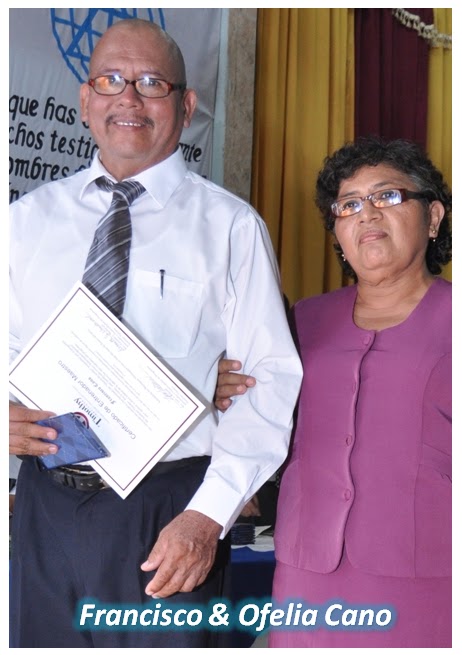
“I am a graduate of the Central American Biblical Institute and the Seeds of Guatemala Seminary, but I have always had problems putting my ideas into practice – the ideas I had never went anywhere,” expresses our brother in Christ, Francisco Cano, pastor of the Mennonite Fraternity of Nicaragua.  

In the Timothy Institute, Pastor Francisco Cano found this element that his ministry was lacking of converting inspiration into implementation.  “In the Timothy Institute, they taught us a very simple way of making Action Plans, and the teachers did everything they could for us to put that technique into practice so that we wouldn’t leave the ideas in the air or just on paper.  That is one of the things that I am most grateful for,” adds Pastor Cano.

Recently, the Timothy Institute celebrated its first graduation in Central America from which 13 pastors from different denominations received their certificate from trainers and teachers.  But it isn’t the diploma that most excites Pastor Cano, rather the results that he has achieved in implementing the Service Plan in the “Malaco” community in the city of Granada.  “Now, the community admires us when before, they feared us,” he describes.

Previously, Pastor Cano and a group of leaders had evangelized in the Malaco neighborhood, a sector ravished with poverty, domestic violence, and a growing number of children on the streets.  “We had evangelized, but we hadn’t done any kind of service, and the people felt down because of us.  The Timothy Institute expanded our view, and that was how we decided to create a work plan that included community service,” explains the pastor.

“After a year in Timothy, we decided that we needed to feed the children.  Then we helped the families that were impacted by the overflow of the lake.  After that, the church was convicted to open a fund for giving out small loans.  We started with a small fund of $600, and with that money various pulperias and tortillerias were strengthened.”

Now the church “Jesus Christ is Lord” has a plot of land donated by the Malaco community where they are already working to build a “place of worship, provision, and education” where children, youth, and women can find an improvement for their life.

The experience of Pastor Francisco and his congregation encourages us, as God’s Agents of Transformation in our communities, to take all of the necessary steps to convert the ideas God give us into concrete actions that demonstrate his love and his purposes.

“The difference between a dreamer and a visionary is that a visionary, besides just having good ideas, has the audacity to take the first step.” Steven Furtick.

More about the Timothy Leadership Trainning Institute on
http://www.facebook.com/pages/Timothy-Leadership-Training-Institute/190872064275717