Wednesday, July 18, 2012

That family umbilical cord


Hultner Estrada & Dave Stienstra

Las Peñitas Beach is a picturesque place.  In this bay of tranquil waters, river currents meet the tides at the Padre Ramos Estuary, one of the wildlife parks in the department of León.

Very close to this beautiful place lives Jaime Pastor Orozco, a friendly local fisherman in his thirties, who is dedicated to the discipleship of youth in his costal neighborhood.

One day, while chating about the cultural differences between Anglo-Americans and Nicaraguans, Jaime Pastor made a comment that I have never forgotten.  “North American youth, at 18 years old, are already looking for a way to leave the nest and live on their own.  We Nicaraguans, at age 18, are looking for ways to bring a woman into our homes.”
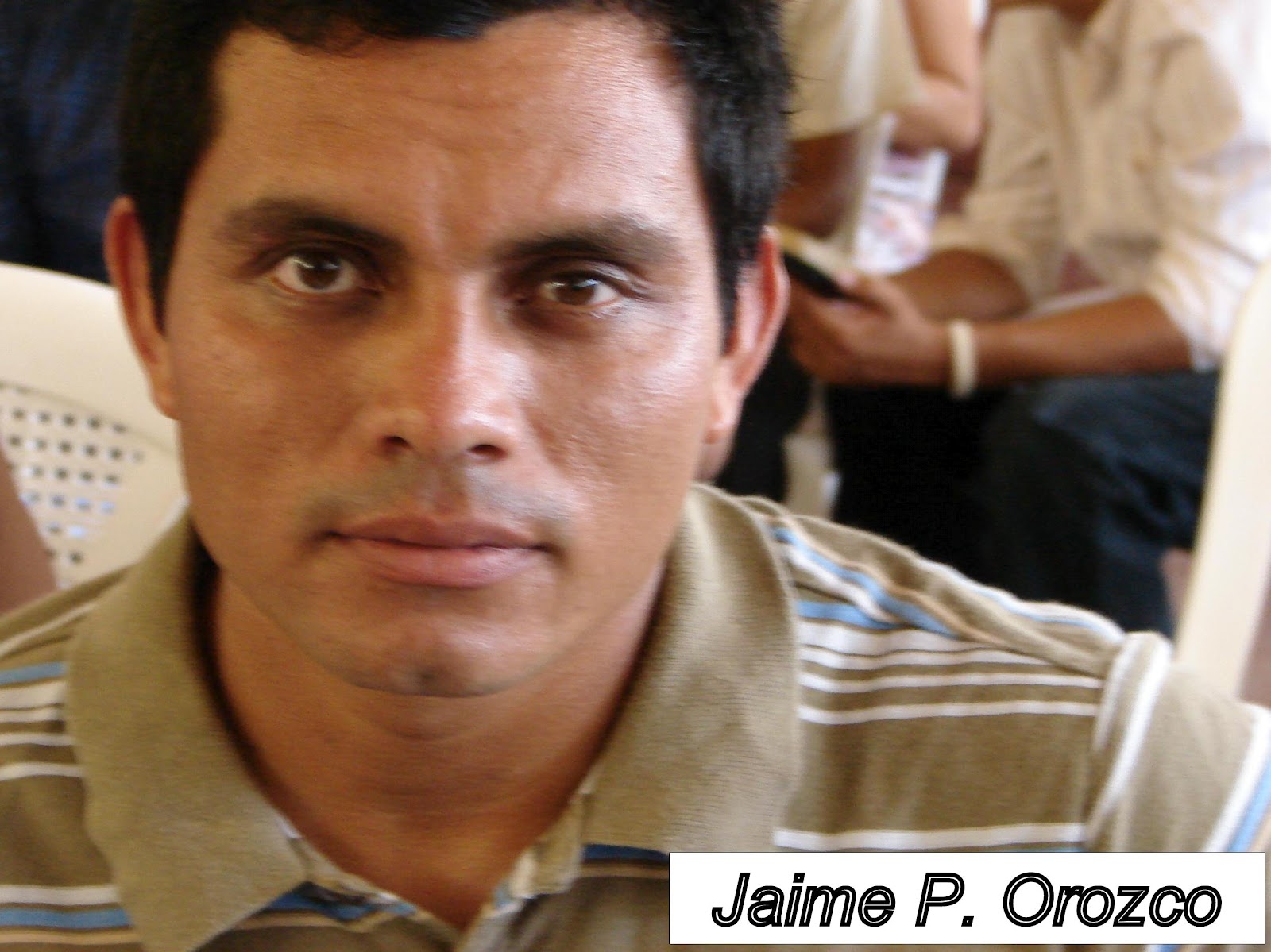
Jaime Pastor’s commentary has made me think much about the reality of thousands of young couples that are living with their in-laws.

Why have so many of the young people who have married decided to live in the home of their in-laws?

The reasons are economic, but also cultural.  They lack a stable income, earning less than $250 per month, and are unable to qualify for a home loan.  Much less are they capable of paying the sizable down payment and associated fees.  But they have not cut the “familial umbilical cord”, which would allow the young couple to establish their own home.

In our culture, a “good son” is a thankful son who remains close to his parents.  As a result, abandoning the parents’ home is understood as a gesture of rejection towards those who raised him.  In many cases, when a son or daughter leaves, it means one less income for the family budget, which is the reason that parents prefer to build an addition onto the house for the newlyweds; it is a strategy for protecting their mutual finances.

“After thirty years of marriage, I had never broken this umbilical cord!” shares Estanislao Ramírez, who, along with his wife, recently completed the marriage course Restoring the Original Model, offered by the Nehemiah Center in the city of Estelí.

“I had never thought about the commandment in the Bible that says, ‘For that reason, a man will leave his father and mother and be united to his wife,’ and that cord was still firmly attached for me,” Estanislao adds.  His wife interrupts, “From the moment that he made some changes in the relationship with his family, our communication and relationship has improved enormously. In this way the course has helped us greatly.”

Cutting the familial umbilical cord is a challenge for young couples, but also for other couples who have years of independence. This is a challenging process if we consider that our culture gives a greater respect and regard for the mother or the father than your own spouse.

Fortunately, many Christians in Estelí and in the coastal area of ​​Leon and other cities are embracing the biblical principles for a married life according to God's design.

"Husbands love your wives ... and the wife must respect her husband."
Ephesians 5:25-33


Monday, July 2, 2012

They Helped Us Expand Our Radars


Hultner Estrada & Bethany Beachum

When a worldview is improved, the changes that people experience are always surprising.

This past month, more than 100 leaders from different churches in three Nicaraguan cities completed the first level of the program for formation of Agents of Transformation, bringing to close a year of studies in Biblical Worldview.

Although the Nehemiah Center has already been facilitating workshops for eight years now, the testimonies that come out of the end of each cycle are always surprising.  For example, Julián Garcia, a rancher from the town of Estelí, tells us:

 “I don’t have much education, I wasn’t even able to finish primary school, and maybe that is why I have always had difficulties with relating to other people.  I always thought it would be very hard to become an important person in society, but with these courses I have felt uplifted.  I feel that I have grown so much and have been trained to understand that the Lord has called me to be an Agent of Transformation.

Another thing that has kept me from relating well with other people is the Christian message that I had received, which was a very accusatory and condemning one.  Now, I feel much freer to talk about the Lord because I can share a gospel of peace.  Now I can tell others that He is a God of love, that He wants His people to flourish, and that it is us that He is calling to bring about that flourishing.”

On the part of Zulema Trujillo, a nurse in the hospital of Chinandega, she summarizes her experience with the following:

 “Because of a poor decision I made when I was younger, I distanced myself from the life of the church.  Ever since then it has been very difficult for me to return to a good relationship with the Lord.  Furthermore, because of my job, I don’t allocate time to be involved in any type of ministry.  So really I have felt sad in my life as a Christian; I have felt useless before God.

But through the courses on Biblical Worldview, I have realized that what I am doing in the hospital is a way of serving God, that I can minister, I can serve and be useful to God from my workplace.  And that, for me, has been very beautiful.  Now I feel that I can enjoy my job more.  I feel that I am close to God and that I serve him every time I help another person.  I feel that I have been freed.”

Stories similar to this one are very common at the end of the worldview courses, but we should clarify and recognize that the source of all such changes is the Word of God.  It is the rediscovery of Biblical truth and how we understand the world and ourselves as creations and co-workers of God.


As Julián García expresses, it is these truths that “have helped us expand our radars toward our own family and our community and come to understand that God wants a transformed society and we are His instruments to carry it out.” 

Friday, June 15, 2012

Transformation in the Computer Lab


Hultner Estrada

In general, we don’t question our customs.

They are part of us, day after day, and because of how well they work, we don’t see much reason to change them.

“We were accustomed to using pirated software.  We saw this as the “normal” thing to do – we didn’t know it was illegal.”  With these words, the director of the Bethlehem Baptist School of Managua describes what has become the widespread culture for using software at the national level.


A large number of the cybercafés, academies, and schools in Nicaragua that teach computer literacy, use “cloned” or “borrowed” software licenses, as has become the norm for the rest of the world as well.  “It wasn’t until the folks from REDPROCOM came and made us aware that we came to see that we were being poor Christian witnesses,” adds director Jazmina López.

REDPROCOM is a network of Christian computer teachers that was started by a small group of friends who were interested in transforming the culture of technology use in Christian schools in Nicaragua.  With the support of the Nehemiah Center, ACECEN, EDU-DEO, and FH-NICARAGUA, they are promoting the use of free software and teaching ethics in the world of computer usage.


“Honestly, I had a lot of fears about changing our computer system”, says director López.  “The teachers feared that it would draw many complaints from parents and that the students would be resistant to the change – they were already accustomed to the programs, the colors, the layout of Microsoft Office and we thought they weren’t going to like the Ubuntu programs.  But in the end, it all turned out well.”

The teachers of Bethlehem Baptist School, along with other Nicaraguan schools have joined the trainings that are being organized by REDPROCOM.  “The teachers have received many tools and have discovered many new options they weren’t familiar with before,” adds the director.  “We also discovered that using the free software, we weren’t incurring as many costs from repairing machines infected with viruses.”

“Now we have realized that we have made the best decision.  We feel that we are working with total integrity and that we have authority to tell our students that they too should be doing things honestly,” shares López, who on her part thanks God and the REDPROCOM staff who are caring about teaching correct computer usage in Christian schools.

“Do not quench the Spirit.  Do not treat prophecies with contempt
but test them all; hold on to what is good, reject every kind of evil.
May God himself, the God of peace, sanctify you through and through.
May your whole spirit, soul and body
Be kept blameless at the coming of our Lord Jesus Christ.”
Apostle St. Paul


More about
EDUDEO
MISSIONARY VENTURES
FH-NICARAGUA


Saturday, June 2, 2012

A Modern-Day Slavery


By María Lourdes Rivas*
  
Slavery still exists.
Human trafficking currently takes third place for the most severe issues affecting Central America after narcotrafficking and the smuggling of weapons.  Nicaragua is first on the list of “source countries” for human trafficking, and evidence shows that Guatemala is the highest “consumer” in the region.

Women, children, and adolescents of both sexes are the principal target of traffickers’ networks who seek the sale of organs and the trafficking of persons for sexual or labor exploitation.

According to the National Coalition for Human Trafficking, the furthest borders of Nicaragua (to the north and to the south), are the territories where the majority of traffickers operate.  Chinandega, León, Madriz, Nueva Segovia, Rivas, and Rio San Juan are the departments with the highest number of cases of trafficking victims.

The threat is so real and so close that it is affecting the evangelical church.  In a survey done by the Nehemiah Center (2011) with two groups of pastors and leaders from León and Chinandega, 74% of those interviewed claimed that this is a problem that has been affecting their congregations for some time now.  80% of those surveyed were in agreement that the church should act in response to this reality.

The pilot project Combating Human Trafficking in Nicaragua, directed by the Nehemiah Center, has been researching this topic during the past year and has been training 12 churches in León and Chinandega in themes such as Legislation on Human Trafficking, Victim Counseling, and Action Plans for preventing trafficking in communities.

Through these trainings, the churches have been able to verify that the buying and selling of persons is a real threat in their neighborhoods.  Before, many leaders though that the cases of minors disappearing were an issue resulting from rebellious adolescents that had run away from home.  With the information they now have, they have been able to effectively recognize these cases as human trafficking.

At the beginning of this year, thanks be to God, we were able to rescue a girl from Chinandega.  Following the procedures they had learned, through prayer, and by working as a team, we were able to learn the whereabouts of the girl just before she was about to be transported by traffickers to El Salvador.  The young girl is now receiving spiritual and psychological support.

The Nehemiah Center is concluding the pilot project in the next month.  We are very satisfied with what we have accomplished, but we hope to continue with this effort.  We are praying for the human and financial resources to continue with this work of prevention and attention to victims.  It is risky work, but it is also a duty: as Christians we are called to live an abundant life in Christ, but we are also called to announce and defend the plentitude of life in the context of slavery and death.

*Project Facilitator, Combating Human Trafficking in Nicaragua.

Monday, May 21, 2012

“CRWRC has always had a wise word to offer…”


Bethany Beachum & Hultner Estrada

With this quote, Luz Urania Largaespada describes the contribution that CRWRC has made to the growth of the Nehemiah Center, one of the institutions CRWRC has worked with in Nicaragua promoting the transformational development of families, communities, and the whole nation.

Since 1962, the Christian Reformed World Relief Committee (CRWRC) has contributed to helping thousands of people who live in poor communities find the roads to work their own way out of poverty.  “We are happy and our hearts are moved by the 50th anniversary of CRWRC,” expressed Pastor Daniel Boniche, director of the Nehemiah Center.

The work of CRWRC strives to connect people with their God-given dignity; it is work that demonstrates the love of the Savior and His love for justice and mercy.

In the words of Pastor Boniche, “CRWRC has been very involved with the Nehemiah Center since its beginnings, and each time we have come up against a new challenge, CRWRC has been a resource for the appropriate training to overcome the challenge.”

Luz Urania Largaespada, coordinator of trainings at the Nehemiah Center, emphasizes the contribution CRWRC has made to the formation and training of personnel, pastors, and leaders in a way that integrates the different networks and programs.  “We have received training in the topics of Results Based Management, Education Based in Dialogue, and the Dimensions of Transformational Development – all key components of our work.”

“We have been trained in all of the justice themes we promote,” adds Luz, “Topics such as HIV-AIDS, domestic violence, and human trafficking.  CRWRC has allowed us to share these topics with other national and international partners and has also given us economic resources to carry out specific projects geared toward families, churches, and communities that have been affected by these social issues.”

Teresa Bobadilla, director of Christian Medical Action, another one of CRWRC’s partner agencies, stresses the Holistic Mission element of the Christian Reformed World Relief Committee’s work.  “This is a component that has strengthened the efforts of community development that many people are carrying out in their communities and families,” she states, “Therefore we want to congratulate all of those who collaborate with CRWRC in different countries around the world and especially in Nicaragua.”

Luz Urania Largaespada points out another detail that has been significant in the partnership between CRWRC and the Nehemiah Center, “The fact that the representative of CRWRC shares an office with us has been a great support.  He has been a source of consultation and constant accompaniment during this time, not only in the topics that correspond to the institution but in other issues as well.  Every time we have consulted him, he has had a wise word to offer us,” concludes Luz Urania.

Our best wishes for all the brothers and sisters of CRWRC.  Keep up the spirit of bringing acts of comfort and mercy to the most downtrodden.

Monday, May 7, 2012

Pastors of Knowledge and Understanding


Hultner Estrada with Bethany Beachum

“We learned that we shouldn’t talk badly to our children.”
A sister in Christ testified that when she was young, her father told her, “I want you to study and to exceed so you will be prepared when your husband abandons you.”  This is how he raised her – with this mentality that marriages always fall apart.  So what I learned is that I should not set my kids up for a failed future.

With these words pastor Marcos Pérez expressed his satisfaction for having participated in the Mentoring in Biblical Counseling course.

“Some that I can say I have taken from this mentoring is the topic of the Five Love Languages.  Despite having 14 years of experience in ministry, this was something new for me, and I have been able to incorporate it into my life – as much in my own marriage as with other couples I counsel,” adds sister Glenny Peralta.

This course exclusively for pastors lasted one year.  A total of 13 pastoral couples coming from Masaya, Managua and Ocotal graduated from the course.

“We were taught to become better listeners and to take on the problems of others to become more effective counselors.  Through a class on the Principles of Psychology, we learned that we cannot spiritualize everything, rather we need tools to identify the real causes of problems,” summarizes Pastor Modesto Barrera.

The course Mentoring in Biblical Counseling covers such topics as Fundamentals of Biblical Counseling, Financial Advising, Internal Health, and Conflict Resolution.

“I feel better equipped.  Now I have answers to many things which I didn’t before,” says Pastor Jairo Barrios.

“Curiously, every meeting was a message that spoke to our hearts.  Each time we came, the mentoring we received was on a topic that we needed at that moment or about a situation we were in the midst of.  My husband and I would always say: ‘This is no accident, this is the Lord preparing us,’” adds sister Martha Rizo.

Pastor Pedro José Rivas told us, “The topic of Conflict Resolution impacted me greatly.  It has helped me in my ministry, in my own person, and even in my own marriage.  Another new thing I learned was the concept of “quality time,” and now my wife and I are putting it into practice.”

Finally, Pastor Juan Quintana shared some comments with us, “I thank God for this opportunity he has given and because I felt as though I was taken into account.  In five years of being a pastor, this is the first time I have been invited by an organization to be trained in Biblical Counseling and this has encouraged me greatly.”

The Nehemiah Center thanks the participants, the facilitators, and the brothers and sisters that have made the Mentoring in Biblical Counseling possible.  Thank you to those who we are seeing fulfill the promise of Jeremiah 3:15.

Then I will give you shepherds after my own heart, who will lead you with knowledge and        understanding.

Friday, April 20, 2012

Who then will quench this thirst?

Hultner Estrada with Bethany Beachum


“Through the Mission for Transformation courses I learned how to be inquisitive,” says Fátima Guevara, a leader of “La Hermosa” Church in Estelí.

There is an interesting story behind the previous statement.
Fátima, a physical therapist by profession and a youth leader in ministry, is a friendly and a hard working person. She admits, however, that she had certain fears that affected her ministry.  “Because of my shy personality, I had a lot of difficulty relating with other people.  In my youth group I kept a distance between myself and the youth.  I would just arrive, share a message, we would sing some songs, we would interact a bit, and then it was, ‘See you next Monday!’  The following Monday, we would repeat the same thing.  I was not someone who would ask the kids how they were doing or how their families were.  For me, that was like meddling in their lives.  I had a lot of fears, but after attending some of the courses for youth leaders, I was able to understand the importance of getting closer to the kids, establishing personal relationships, and seeking them out during the week as well.”

“In the courses, I learned that my thinking had been wrong.  I learned that when I ask questions, it makes others feel like I am interested in them.  Now I ask, “What’s your name?  Do you have siblings?  How are you feeling?  How have you been doing?’” says Fátima.

In the Nehemiah Center’s courses for youth leaders, we studied how Jesus was always asking questions and how at times, he even asked questions that seemed childlike.  For example, he said to the blind Bartholomew, “What do you want me to do for you?”  On another occasion, he said to a man who had waited for a miracle for 38 years, “Do you want to be healed?”  Even to his enemies, he asked, “Why do you want to kill me?”

These questions that Jesus asked gave a distinctive character to his ministry.  He gave people the opportunity to express themselves with their own voice and he gave them all of his attention.  This is how we see him on the road to Emmaus, asking his confused disciples, “What are you talking about amongst yourselves?”  Then we see him give them all the time necessary for his followers to tell him the whole story.

And us?  Do we ask questions?  Is our ministry distinguished by an ability to ask questions before speaking and acting?  How willing are we to listen to the details of those stories other people need to tell?

Just imagine what could happen if we asked more often in the communities or groups where we serve, “What can I do for you?”  “What are the people talking about?”, “What are your concerns?”  With Jesus’ example, we are given permission to do this!

Fátima reminds us that a Christian leader should be inquisitive.  In these times of fleeting and superficial relationships, our society is thirsty for those who take the time to listen to others and for people who show a genuine interest in finding answers more than imposing answers.  If the Church of Jesus Christ does not do this, “Who then will quench this thirst?”

"Always the beautiful answer who asks a more beautiful question."

E.E. Cummings.